Signs of the times: a winner

Congratulations to Katherine Tong for correctly figuring out the answer to the puzzling inscription from yesterday’s post.

As you will recall the inscription was as follows:

This very perplexing because the final letters of StatE and UniversitY are enlarged, but not the final letter of WaynE.  As Katherine correctly points out, this is because on various places in the Wayne State website, as well as letterhead, and other inscriptions around campus, the words are arranged as follows:

with the words in two lines.  To only enlarge the W, S, and U would look unbalanced in this context, because the leftmost W and U would both be enlarged, giving it a definite leftward skew, so the final letters of ‘state’ and ‘university’ are also enlarged.  The final E in Wayne is not treated this way, however, because it falls in the middle of the line.    As Katherine points out, if this inscription intended for two lines (or one originally on two lines – there’s no way to tell) were put on a single line, the result would be the incongruous one seen in the puzzle.

It’s worth noting, though, that the U and Y in UniversitY are lowered, not raised as in the first inscription; it wouldn’t make any sense at all to lower the U and Y in an inscription where there is only one line – in fact, it requires there to be a constant typographic baseline.  When there are two lines, having a constant baseline wouldn’t make any sense because then the raised U and Y would create a gap between the baseline of the top row and the mean line of ‘niversit’.   This makes me suspect that someone just said to the people in facilities, ‘Give me a set of Wayne State University letters’ and then received the letters (with the enlarged W, S, E, U, and Y) but then, when actually laying the letters out on a single line, just put them in the way that made the most sense.

There is a third letter pattern seen around campus, which is the ‘correct’ single-line layout, with a fixed baseline and only the initial letters enlarged/raised:

Here, one could raise the last letter of UniversitY, but there is no great incentive to do so; in the second image above, both the W and U were on the left, and thus cognitively demanded some balancing, but here, the raised W, S, and U are relatively evenly spaced throughout the single line.

Issues such as these are of constant concern in the fields of typography and graphic design,  but in the anthropological and archaeological study of writing systems, and indeed in classical epigraphy, they are almost completely ignored, which I think is a serious mistake.   Epigraphy can tell us a lot about the aesthetic interests of a society, and the way in which certain principles are emphasized is not just a casual choice, but reflects decisions made for understandable reasons – some meaning-bearing (semantic), but others reflecting aspects of script far removed from the direct graphic communication of meaning.

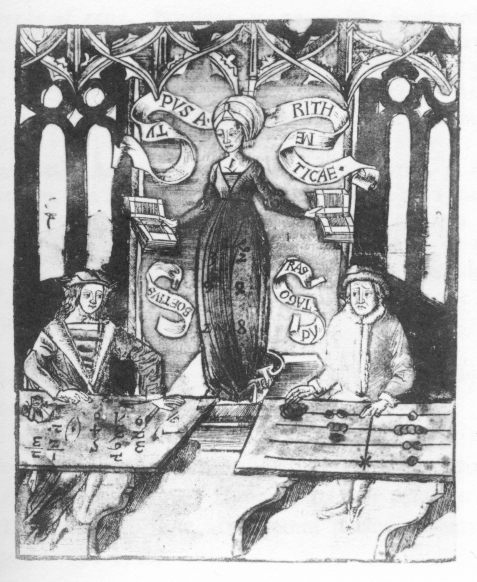
Liz Throop, a professional graphic designer / design instructor, has discussed the cognitive and aesthetic shifts required when integrating the Western numerals into early European printing technology (Throop 2004).  This is a topic that I will be expanding upon at the International Medieval Congress next spring at an AVISTA session run by my colleague Shana Worthen.    Similarly, my colleague John Bodel at Brown, who is a Roman epigrapher, introduced me to his concept of ‘paragram’: signs and graphic conventions that normally stand outside writing systems as conventionally conceived and yet which play a crucial role in shaping how we understand and read texts.  Thinking about these sorts of quasi-aesthetic decisions has forced me to go beyond the question ‘What is the set of valid signs in X script/numerical system?’ and to think about the way that graphemes are designed, combined, arranged, and modified for various purposes in various contexts.

I should add that it may not be a coincidence that Katherine, who was one of my honours thesis students last year, and has now moved on to bigger and better things at the University of Toronto, was the first to correctly determine the explanation.  While she is not exactly a ‘ringer’ in this contest, she is the author of a truly exceptional paper, and certainly the most bizarrely titled: “THE MR MAROR TO BE JOLLY LA LA LA LA LA: An investigation of writing (and gibberish) on Dollarware” (Tong 2008), which is part of The Dollarware Project.  It is an analysis of the aesthetic, semantic, and just plain bizarre text found on discount ceramic mugs, and is (if I may say so) better than her thesis, and seriously in need of a peer-reviewed publication venue.

Katherine will be claiming her prize shortly, the privilege of choosing the topic of an upcoming post here at Glossographia.  Congratulations!

Works cited

Throop, Liz. 2004. Thinking on paper: Hindu-Arabic numerals in European typography. Visible Language 38(3): 290-303.

Tong, Katherine. 2008. THE MR MAROR TO BE JOLLY LA LA LA LA LA: An investigation of writing (and gibberish) on Dollarware. Dollarware Project, report 17.  http://dollarware.org/report17.pdf.

Signs of the times: a contest

Here’s a bit of a puzzler for you:  Identify what is wrong with this inscription found at my place of employment, and then explain why it is the way it is.

There isn’t a big cash prize for the winner, but I tell you what: the first correct respondent will get to decide the topic for an upcoming post at Glossographia.

Edit: Everyone has picked up on the inconsistency; the last letter of Wayne is not capitalized but StatE and UniversitY are.  However, no one has yet correctly discerned the explanation, so the contest continues!

A clarification

I realize upon rereading my last post on the Frost ‘alphabetic gene’ hypothesis that I was a bit unclear.  My difficulty is not with the purported aim of Medical Hypotheses to publish work without peer review, or that I consider that Frost’s article had best been left unpublished.   One of the real problems of peer review is that it is an extremely conservative process that has all sorts of inherent limitations.  I’m a big supporter of publish-then-review over review-then-publish, even though it means that yes, some crap will be published, and in fact probably a lot of crap will be published.   For online publications, there is no technical reason not to do so.

Nor is it the interdisciplinary nature of the research; as an anthro-linguo-evo-archaeo-historical cognitive scientist, I basically believe that all disciplinary boundaries are essentially artificial, and while occasionally useful, frequently limit discussions in unfruitful ways.   I am constantly amazed at the huge gaps in knowledge in my own field of study that exist, I believe, because disciplinary boundaries discourage the asking of certain types of questions.  (It did make it very easy to find things to write about though!)

Nor even was the problem with Frost’s specific formulation: I believe it to be in error, and in fact that the test implications of the hypothesis are not too difficult to reject, but it is interesting. And after all, if he hadn’t published it, I wouldn’t have had so much fun thinking about the idea critically.

No, if I have a difficulty, it is that I don’t think it is maximally productive for journals like Medical Hypotheses to be run (and to have articles chosen) strictly by medical scientists. My proposal for a sister journal, Social Hypotheses, was only half in jest – I think we desperately need a sort of reformulation of Notes & Queries or the way Man used to be back in the old days, with short empirical, theoretical, and indeed speculative pieces that can be produced rapidly and disseminated to a wide audience.  But I don’t want to know only what doctors want to know about anthropology; I also want to know what architects, astrophysicists, and yes, even anthropologists want to know about anthropology.  Maybe I’m not really talking about journals; maybe that’s old-fashioned 20th century thinking.  Maybe I’m just talking about indexing academic blog posts in a way that lets them get to the people who need to read them.

Is there an alphabet gene?

I’ve been ruminating for the past couple of weeks about a little speculative article by Peter Frost, a Canadian evolutionary anthropologist whose primary work is on human sexual dimorphism.  In ‘The spread of alphabetical writing may have favored the latest variant of the ASPM gene’ (Frost 2008), Frost makes the remarkable assertion that there is a gene variant whose distribution is best explained by its use for cognitive tasks relating to alphabetic literacy (and specifically not non-alphabetic literacy).

This is a non-peer-reviewed paper in the journal Medical Hypotheses, which publishes papers that its editors (all medical scientists) decide are worthy of note, even when (or especially when) they challenge conventional wisdom.  I really like the publish-then-review model, but I do wonder whether in this case what is really needed is a journal (let’s call it, hypothetically, Social Hypotheses) to allow social scientists have a role in determining what is likely to be important or interesting.  Because, while the genetic evidence is fairly straightforward, the cognitive and more importantly the historical evidence are the truly controversial elements of Frost’s paper.  It rests initially on the following facts, which, not being an expert on human genetics, I’m just going to grant for the sake of argument:

– There is a gene, ASPM, that regulates brain growth, and that has evolved many variants, the latest of which emerged around 6000 years ago in the Middle East.

– It is much more common today in populations in Europe and the Middle East than in East Asia.

– While it relates to brain growth, it does not correlate with increased IQ, suggesting that its cognitive function is subtle.

Frost argues from this, quite plausibly, that this latest variant assists performance on some task relating to cognition and that expanded from a Middle Eastern origin starting around 6000 years ago.   He then moves on to the evidence I am more familiar with, to argue that that task was alphabetic writing.

– Writing developed in the Middle East around 3000 BCE, and phonetic alphabets around 2000-1000 BCE. This is sort of true; there is increased phoneticity in Near Eastern scripts over time, and purely phonetic scripts (like Ugaritic and Proto-Sinaitic) emerged as early as the 18th-15th centuries BCE (Lemaire 2008).    However, this is in the range of 3500-4000 years ago, not 6000, which makes the emergence of the ASPM variant at 6000 years ago rather early for his timeframe.

– Literacy levels in the ancient world range from 10% – 33% of adult males. False: this may have been true of Roman citizens (which is where Frost’s data come from), but was decidedly not true in the ancient Near East including both Egypt, Mesopotamia and the Levant.  Literacy rates certainly varied, but were probably in the 5-7% range at most in the period under consideration (van der Toom 2007: 10).

– East Asian writing is pictorial or ‘ideographic’. False; although there are logographic (word-writing) and ideographic (idea-writing) elements to the Shang Dynasty script (the earliest East Asian writing), just as with modern Chinese writing, there are phonetic complements, rebuses, and other linguistic aspects to the script from an early date.  John DeFrancis has essentially demolished the myth of Chinese picture-writing, showing it to be factually inaccurate and often marshalled for derogatory purposes (Defrancis 1989). It is true, however, that there was no ancient alphabetic writing in East Asia.  However, Japanese syllabic writing (kana) has been around since the 6th-7th centuries AD.

– Alphabetic writing has different cognitive advantages and demands than non-alphabetic writing. Yes, true, but not in simple or easily understandable ways (Olson 1995).  Frost is asserting on the basis of some experimental evidence that information is processed differently by Chinese literates reading in Chinese.  But Chinese is only one non-alphabetic script, and it has only been compared cognitively to the Latin alphabet we have no systematic comparative idea of how differently structured scripts affect cognition.  Frost’s reasoning certainly implies that Japanese writing should have similar effects to alphabetic writing, despite the near-absence of the ASPM variant there.

– Scribes were prestigious individuals who were highly valued, and those who excelled at scribal tasks would have been better-nourished and wealthier, thus more equipped to have greater reproductive success. Possibly true.  However, we have no evidence that they actually did have such success to a greater degree than non-literate elites, or indeed that they enjoyed such success at all.  Frost reasons from their social value to their reproductive success, which is plausible but unverified.

– Thus, if the ASPM variant did aid in the processing of alphabetic information, then it would be selected for among scribes and indeed among their offspring, some of whom would be literate but others of whom would not.

It will be clear, I should hope, that my difficulties with the points of evidence above render me highly skeptical of Frost’s conclusion.

As Frost notes, we would expect to find higher rates of the ASPM variant among societies that have long histories of alphabetic writing, if his theory is correct, and lower rates among societies that lack such histories. Good evidence for his position would be, as he notes, if African groups like Hausa and Fulani (long-term alphabetic scribal traditions) had high levels of the variant but other groups didn’t (similarly, if there were contrasts between Chinese and Japanese, or between Georgian and Chechen, this would tend to be confirmatory).

But he does not mention another important prediction that I think has been tested and refuted:  If the new ASPM variant plays the role he says it does, then East Asians should have difficulty learning alphabetic writing, even if raised using only alphabetic scripts.   There simply is no evidence that this is the case, and if it were true, would have incredible implications for public policy.  Moreover, the widespread use of purely phonetic scripts like the Japanese syllabaries, which really ought to have the same cognitive consequences as alphabets, should be problematic for East Asians.  It isn’t, and this is serious disconfirmatory evidence against the hypothesis.

Frost is right, though, that whatever factor selected for this ASPM variant must have been present / emerged around 6000 years in the Near East but should not have emerged or been significant in East Asia, and factors such as ‘food domestication’ and ‘urbanization’, which emerged in both regions, won’t suffice.

But what about the possibility that the ASPM variant helps promote encephalization with respect to particular plant  domesticates – e.g., wheat / barley, the classic Near Eastern domesticates, as opposed to rice and millet (the ancient East Asian domesticates)?  Here, the explanation is that individuals with the ASPM variant in the Near East had greater reproductive success because they were better able to use local domesticates to promote encephalization.  Individuals who lacked the variant still derived nutrition from these foods, but not in a way that contributed to brain growth. Obviously, I’m not a nutritional anthropologist or a dietician or even an expert on human evolution.  I’m not proposing this simply as a plausible alternative, given the complete insufficiency of the alphabetic hypothesis.  It is also testable – one would expect that grain-eating societies would have higher levels of the variant than non-grain-eaters in the same general geographic areas, all other things being equal.  But now we are back in the realm of Medical Hypotheses and outside anything to which I could claim to be anything more than an interested nonspecialist.

Works cited

DeFrancis, John. 1984. The Chinese language: fact and fantasy. Honolulu: University of Hawai’i Press.

Frost, Peter. 2008. The spread of alphabetical writing may have favored the latest variant of the ASPM gene.  Medical Hypotheses 70(1): 17-20.

Lemaire, Andre. 2008. The spread of alphabetic scripts (c. 1700 – 500 BCE). Diogenes 55(2): 45-58.

Olson, David R. 1995. Towards a psychology of literacy: on the relations between speech and writing. Cognition 60(1): 83-104.

van der Toom, Karel. 2007. Scribal culture and the making of the Hebrew Bible. Cambridge, MA: Harvard University Press.

Review: Omniglot

Omniglot is an encyclopedic web site detailing the structure and history of the world’s writing systems.  Created in 1998 by Simon Ager, a web developer who is both polyglot (a learner of many languages) and linguist (scholar of language), it reminds me in so many ways of the Phrontistery – a site that began as one young man’s obsession and has turned into something more over the past decade.   I consider it to be the best online information source for writing systems; sure, you could go to Wikipedia, whose page on the topic is currently very good, but why bother?  If you can’t afford The World’s Writing Systems (Daniels and Bright 1996), the best print volume out there, then Omniglot is a good place to start.   I don’t know Ager personally, but I think when my book comes out that I’ll see what can be done about improving his numerals page, which really isn’t as informative as it could be.

Simon Ager also runs an Omniglot blog, which is primarily about second-language acquisition and topics related to multilingualism, particularly discussions of specific differences among words in different languages, but digresses into all sorts of other topics of interest to lingustically-minded anthropologists, such as literacy studies, animal communication, and language evolution.  It’s all written in a very accessible and engaging style, and requires virtually no background knowledge of the subjects in order to be enjoyed.  Refreshingly, he is always happy to admit when his knowledge of a topic is imperfect and to use his readers to learn more.

Recent posts of interest

Txtng nt bd 4 U

Television and stinky badgers

Writing systems and manuscripts

Works cited

Daniels, Peter T. and William Bright, eds. 1996. The World’s Writing Systems. New York: Oxford University Press.