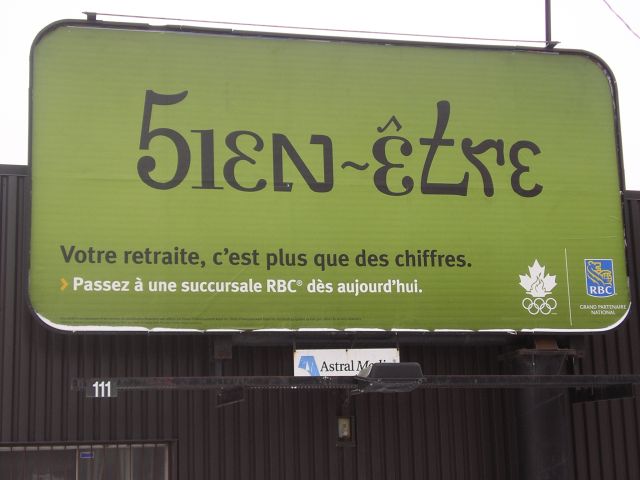
Is there an alphabet gene?

I’ve been ruminating for the past couple of weeks about a little speculative article by Peter Frost, a Canadian evolutionary anthropologist whose primary work is on human sexual dimorphism.  In ‘The spread of alphabetical writing may have favored the latest variant of the ASPM gene’ (Frost 2008), Frost makes the remarkable assertion that there is a gene variant whose distribution is best explained by its use for cognitive tasks relating to alphabetic literacy (and specifically not non-alphabetic literacy).

This is a non-peer-reviewed paper in the journal Medical Hypotheses, which publishes papers that its editors (all medical scientists) decide are worthy of note, even when (or especially when) they challenge conventional wisdom.  I really like the publish-then-review model, but I do wonder whether in this case what is really needed is a journal (let’s call it, hypothetically, Social Hypotheses) to allow social scientists have a role in determining what is likely to be important or interesting.  Because, while the genetic evidence is fairly straightforward, the cognitive and more importantly the historical evidence are the truly controversial elements of Frost’s paper.  It rests initially on the following facts, which, not being an expert on human genetics, I’m just going to grant for the sake of argument:

– There is a gene, ASPM, that regulates brain growth, and that has evolved many variants, the latest of which emerged around 6000 years ago in the Middle East.

– It is much more common today in populations in Europe and the Middle East than in East Asia.

– While it relates to brain growth, it does not correlate with increased IQ, suggesting that its cognitive function is subtle.

Frost argues from this, quite plausibly, that this latest variant assists performance on some task relating to cognition and that expanded from a Middle Eastern origin starting around 6000 years ago.   He then moves on to the evidence I am more familiar with, to argue that that task was alphabetic writing.

– Writing developed in the Middle East around 3000 BCE, and phonetic alphabets around 2000-1000 BCE. This is sort of true; there is increased phoneticity in Near Eastern scripts over time, and purely phonetic scripts (like Ugaritic and Proto-Sinaitic) emerged as early as the 18th-15th centuries BCE (Lemaire 2008).    However, this is in the range of 3500-4000 years ago, not 6000, which makes the emergence of the ASPM variant at 6000 years ago rather early for his timeframe.

– Literacy levels in the ancient world range from 10% – 33% of adult males. False: this may have been true of Roman citizens (which is where Frost’s data come from), but was decidedly not true in the ancient Near East including both Egypt, Mesopotamia and the Levant.  Literacy rates certainly varied, but were probably in the 5-7% range at most in the period under consideration (van der Toom 2007: 10).

– East Asian writing is pictorial or ‘ideographic’. False; although there are logographic (word-writing) and ideographic (idea-writing) elements to the Shang Dynasty script (the earliest East Asian writing), just as with modern Chinese writing, there are phonetic complements, rebuses, and other linguistic aspects to the script from an early date.  John DeFrancis has essentially demolished the myth of Chinese picture-writing, showing it to be factually inaccurate and often marshalled for derogatory purposes (Defrancis 1989). It is true, however, that there was no ancient alphabetic writing in East Asia.  However, Japanese syllabic writing (kana) has been around since the 6th-7th centuries AD.

– Alphabetic writing has different cognitive advantages and demands than non-alphabetic writing. Yes, true, but not in simple or easily understandable ways (Olson 1995).  Frost is asserting on the basis of some experimental evidence that information is processed differently by Chinese literates reading in Chinese.  But Chinese is only one non-alphabetic script, and it has only been compared cognitively to the Latin alphabet we have no systematic comparative idea of how differently structured scripts affect cognition.  Frost’s reasoning certainly implies that Japanese writing should have similar effects to alphabetic writing, despite the near-absence of the ASPM variant there.

– Scribes were prestigious individuals who were highly valued, and those who excelled at scribal tasks would have been better-nourished and wealthier, thus more equipped to have greater reproductive success. Possibly true.  However, we have no evidence that they actually did have such success to a greater degree than non-literate elites, or indeed that they enjoyed such success at all.  Frost reasons from their social value to their reproductive success, which is plausible but unverified.

– Thus, if the ASPM variant did aid in the processing of alphabetic information, then it would be selected for among scribes and indeed among their offspring, some of whom would be literate but others of whom would not.

It will be clear, I should hope, that my difficulties with the points of evidence above render me highly skeptical of Frost’s conclusion.

As Frost notes, we would expect to find higher rates of the ASPM variant among societies that have long histories of alphabetic writing, if his theory is correct, and lower rates among societies that lack such histories. Good evidence for his position would be, as he notes, if African groups like Hausa and Fulani (long-term alphabetic scribal traditions) had high levels of the variant but other groups didn’t (similarly, if there were contrasts between Chinese and Japanese, or between Georgian and Chechen, this would tend to be confirmatory).

But he does not mention another important prediction that I think has been tested and refuted:  If the new ASPM variant plays the role he says it does, then East Asians should have difficulty learning alphabetic writing, even if raised using only alphabetic scripts.   There simply is no evidence that this is the case, and if it were true, would have incredible implications for public policy.  Moreover, the widespread use of purely phonetic scripts like the Japanese syllabaries, which really ought to have the same cognitive consequences as alphabets, should be problematic for East Asians.  It isn’t, and this is serious disconfirmatory evidence against the hypothesis.

Frost is right, though, that whatever factor selected for this ASPM variant must have been present / emerged around 6000 years in the Near East but should not have emerged or been significant in East Asia, and factors such as ‘food domestication’ and ‘urbanization’, which emerged in both regions, won’t suffice.

But what about the possibility that the ASPM variant helps promote encephalization with respect to particular plant  domesticates – e.g., wheat / barley, the classic Near Eastern domesticates, as opposed to rice and millet (the ancient East Asian domesticates)?  Here, the explanation is that individuals with the ASPM variant in the Near East had greater reproductive success because they were better able to use local domesticates to promote encephalization.  Individuals who lacked the variant still derived nutrition from these foods, but not in a way that contributed to brain growth. Obviously, I’m not a nutritional anthropologist or a dietician or even an expert on human evolution.  I’m not proposing this simply as a plausible alternative, given the complete insufficiency of the alphabetic hypothesis.  It is also testable – one would expect that grain-eating societies would have higher levels of the variant than non-grain-eaters in the same general geographic areas, all other things being equal.  But now we are back in the realm of Medical Hypotheses and outside anything to which I could claim to be anything more than an interested nonspecialist.

Works cited

DeFrancis, John. 1984. The Chinese language: fact and fantasy. Honolulu: University of Hawai’i Press.

Frost, Peter. 2008. The spread of alphabetical writing may have favored the latest variant of the ASPM gene.  Medical Hypotheses 70(1): 17-20.

Lemaire, Andre. 2008. The spread of alphabetic scripts (c. 1700 – 500 BCE). Diogenes 55(2): 45-58.

Olson, David R. 1995. Towards a psychology of literacy: on the relations between speech and writing. Cognition 60(1): 83-104.

van der Toom, Karel. 2007. Scribal culture and the making of the Hebrew Bible. Cambridge, MA: Harvard University Press.

Review: Omniglot

Omniglot is an encyclopedic web site detailing the structure and history of the world’s writing systems.  Created in 1998 by Simon Ager, a web developer who is both polyglot (a learner of many languages) and linguist (scholar of language), it reminds me in so many ways of the Phrontistery – a site that began as one young man’s obsession and has turned into something more over the past decade.   I consider it to be the best online information source for writing systems; sure, you could go to Wikipedia, whose page on the topic is currently very good, but why bother?  If you can’t afford The World’s Writing Systems (Daniels and Bright 1996), the best print volume out there, then Omniglot is a good place to start.   I don’t know Ager personally, but I think when my book comes out that I’ll see what can be done about improving his numerals page, which really isn’t as informative as it could be.

Simon Ager also runs an Omniglot blog, which is primarily about second-language acquisition and topics related to multilingualism, particularly discussions of specific differences among words in different languages, but digresses into all sorts of other topics of interest to lingustically-minded anthropologists, such as literacy studies, animal communication, and language evolution.  It’s all written in a very accessible and engaging style, and requires virtually no background knowledge of the subjects in order to be enjoyed.  Refreshingly, he is always happy to admit when his knowledge of a topic is imperfect and to use his readers to learn more.

Recent posts of interest

Txtng nt bd 4 U

Television and stinky badgers

Writing systems and manuscripts

Works cited

Daniels, Peter T. and William Bright, eds. 1996. The World’s Writing Systems. New York: Oxford University Press.

Macarthur news: Stephen Houston

I woke up this morning to some exciting news for those of us involved in writing and literacy studies in anthropology.  Stephen Houston, professor of anthropology at Brown University, has been awarded one of this year’s Macarthur fellowships.   The Macarthur is probably the most prestigious award any social scientist or humanist can receive, providing $500,000 in funding over five years with absolutely no strings attached.

Steve is one of the most fascinating scholars I know, and his work on Maya hieroglyphic writing and iconography exemplifies the social and integrative approach to linguistics, epigraphy, and archaeology that motivates me.  His paper, ‘The archaeology of communication technologies’ is in my opinion the most important and accessible existing statement of this perspective; I foist it on my students at every opportunity (Houston 2004).  In it, he makes the case that archaeological decipherment needs to focus both on extracting meaning from ancient texts and on situating those writings in their sociocultural and political context.    Two years ago he and a team of Mesoamericanists published the (undeciphered, and possibly undecipherable) ‘Cascajal block’ in Science, exposing the scientific community at large to an artifact which seems likely to be the oldest Mesoamerican writing yet known (Martinez et al. 2006).   Because he is an anthropological archaeologist, his perspective on epigraphy is both rigorously social-scientific and unapologetically comparative.

I ought to mention that Steve is my ‘uncle’ in scholarly genealogy; he and my doctoral supervisor, the late Bruce Trigger, both studied under Michael Coe at Yale.   He has been of tremendous help to me in thinking about my book, and his kind invitation to me to participate in the School of Advanced Research seminar ‘The shape of script’ last year (edited volume to be out soon, I hope!) led to one of the most productive weeks of scholarly exchange in my life to date.

This award is obviously important to Steve, who now has the pleasurable burden of figuring out how best to use his Macarthur, but it also has ramifications for the field of archaeological decipherment as a whole.  I’m really excited about the attention that this news will draw to our small corner of the world.

Edit to add: Well, it seems as if this post is coming up on all sorts of search keywords related to Stephen Houston, so, welcome to newcomers!  I should probably include a couple of informative links:

Stephen Houston’s research page including publication list

Brown anthropology department page

Works cited

Houston, Stephen D. 2004. The archaeology of communication technologies. Annual Review of Anthropology 33: 223-250.

Ma. del Carmen Rodríguez Martínez, Ponciano Ortíz Ceballos, Michael D. Coe, Richard A. Diehl, Stephen D. Houston, Karl A. Taube, and Alfredo Delgado Calderón. 2006. Oldest writing in the New World. Science 313(5793): 1610-1614.

The politics of pinyin

One of the understudied intersections of linguistics and material culture is what I would call ‘contemporary epigraphy’: the study of modern inscriptions, ranging from traditional subjects (monumental inscriptions) to things like public signs and graffiti.  In my work on numbers, I am constantly on the alert for unusual and interesting uses of number in public texts (see this, e.g.), and recently, I and a group of senior undergraduates at McGill undertook a quantitative, spatial, and linguistically-focused survey of stop signs in Montreal, which has become the ongoing Stop: Toutes Directions project.   This sort of work combines the rigor of linguistics and grammatology (the study of writing systems) with the social analysis of archaeology and urban geography and the textual focus of classical epigraphy and semiotics.

For this reason, I was very interested to see in the news that Taiwan is simplifying its romanization of Chinese writing and will be replacing a huge number of public signs.  Essentially, before now, there was no standard way to transliterate Chinese into a Roman script (not to mention the difficulties in transliterating Chinese into Chinese script).  The existence of multiple standards can lead to all sorts of confusion, because, as the article linked above points out, ‘Minquan Road’ and ‘Minchuan Road’ may in fact be the same road named using two different standards.   This Wikipedia article illustrates the enormous difficulties this might present.  The cost of changing signs that are not in the variant chosen as the new standard (hanyu pinyin) will be considerable.

The pinyin system that has been chosen by the Taiwanese government is probably the most common one used today, primarily due to its official acceptance in the People’s Republic of China (i.e. the mainland) since the 50s and internationally since the 70s.  The article presents the most recent Taiwanese reform as one aimed at international visitors / non-native Chinese speakers, and undoubtedly that is part of the answer.  But any change that brings Taiwan closer to China is not only a business decision but also a sociopolitical one.  The article notes, “Ma’s predecessor resisted the writing system to snub China, which claims sovereignty over the self-ruled island, critics say,” which is no doubt another part of the story.   This change in sign policy is part of ongoing tensions between pro-independence and pro-reintegration factions in Taiwan, and such, echoes the sorts of issues that I have witnessed firsthand in Montreal, where sign texts are important subjects of political and social discourse.

These questions, then, cannot be fully separated from issues of language ideology – how particular languages, dialects, and utterances are conceptualized and evaluated (positively or negatively) both by individuals and by institutions.  It will be very interesting to follow this story as the new changes come into effect.

Phaistos phakery redux

(Originally published at The Growlery, 2008/08/21)

Prior to writing my previous post about Jerome Eisenberg’s conclusion that the Phaistos Disk is a recent forgery perpetrated by its excavator, Luigi Pernier, I unfortunately did not have access to the original article in Minerva magazine in which Dr. Eisenberg announced his findings (Eisenberg, Jerome M., ‘The Phaistos Disk: one hundred year old hoax?’, Minerva, July/August 2008, 9-24). Happily, once he found my post, Dr. Eisenberg commented on it and later sent me an electronic copy for my consideration. I can now report that while I previously thought I knew a lot about the disk, I now have a much better knowledge of the disk and the nature of the hoax claim. Unfortunately, I remain unconvinced, even though I admit that I do want to believe the hoax claim, but I think that the evidence from the sign-forms just isn’t strong enough, that it relies on unproven visual similarities to too great a degree. Let me explain what I mean.

In the previous post, I focused on Eisenberg’s evidence from a) the uniqueness of the artifact’s manufacture, which is unlike the Linear A tablets; b) it uses ‘movable type’ of which no other example has ever been found; c) the idea that Luigi Pernier’s rivalry with Arthur Evans would lead him to do this. In dealing with the first two, I pointed out that comparisons with the Linear A tablets aren’t necessarily that useful if in fact the PD was part of a highly specialized text genre – i.e. it would be like using a monumental inscription to proclaim a handwritten note to be a forgery. Of course we don’t know that it’s part of such a genre, or indeed what genre it could have represented at all – hence the mystery.

The one thing I didn’t focus on is the sign-forms or graphemes on the Disk. In fact, Eisenberg spends a good deal of his paper looking at resemblances between Phaistos signs and signs on other inscriptions from the ancient world in order to assert that the latter formed the models on which Pernier based his forgery. In particular, he aims to show that there are similarities between the Phaistos graphemes and authentic artifacts made much later, but that were known to 19th century archaeologists / epigraphers and thus could have been known to Pernier.

This is an unusual line of argument; it is in fact a sort of cousin to the standard techniques by which experts on scripts postulate cultural borrowings from one society to another. If we have a 10th century BC Phoenician inscription and a very early, 8th century BC Greek inscription that use many similar letter-forms, we make the reasonable inference (all right, it is more complex than this, but you get the idea) that the Phoenician script is ancestral to Greek. In particular this is the case because there is known cultural contact (e.g. trade) between the two societies, and more importantly, because there is not just a graphemic similarity but also a phonetic similarity – the signs don’t just look the same but they have the same / similar sound-values. What Eisenberg is doing, effectively, is turning these resemblances on their heads. If there are similarities between the PD signs and known inscriptions from elsewhere, then those inscriptions may have acted as a model for the forger. If the inscriptions are later in date than the PD, Eisenberg argues, it is far likelier that these artifacts served as a model for the disk’s forger than that the Disk script served as a model for the later artifacts. Similarly, if the PD shows influences from several different regional styles, this suggests that a forger just cobbled together signs from different inscriptions to make something really unique.

Now, the reason I’m unconvinced is that I just don’t think the similarities bear up, and that even where they do they don’t point unequivocally to a hoax. For instance, let’s have a look at Phaistos sign 03:

Now, this is seen by Eisenberg as being modelled after an 18th Dynasty Egyptian wall painting (16th century BC) in which the figure, a Cretan captive is facing the other direction, has extensive facial features, has hair (long, flowing hair), and has a torso with arms. The only major similarity is the two circles on the face. But this seems to go directly against the notion of the Disk as a hoax; the time is right, the captive is Cretan, so the most parsimonious explanation is that they are both genuine representations of some sort of facial decoration (indeed, as Eisenberg suggests, it may be a Cretan ‘double earring’). But, writing, “It was certainly derived from the wall painting”, Eisenberg proceeds to write as if it is now a given that Pernier did, in fact, use this as a model for sign 03 (Eisenberg 2008: 17).

When we get to one of the more unusual characteristics of the Disk – the presence of five hand-incised dots on each side of the disk, and ‘word-separating’ vertical lines – I’m in my element, because these, Eisenberg sees as being modelled after the Cretan five dots = the numeral 50 and vertical bar = the numeral 100. This is dangerous territory though – dots and lines are ubiquitous in scripts and numerical systems. And are we really to believe that Pernier needed a model to think of the idea of adding bars and dots to a forgery? These are stylistic elements found in virtually any script worldwide, and are not indicative of anything. One of the real problems with the study of writing systems is the assertion of cultural relationships based on passing visual similarities, and one of the things that we do not yet know how to do well is to know how similar two graphemes must be before a claim of diffusion can be sustained. This is the same sort of reasoning used to argue for a hoax in this case, and ultimately its inclusion greatly weakens Eisenberg’s argument, and made me look much more critically at the remainder of his claim.

But the heart of the issue is that Eisenberg is working at cross-purposes here. On the one hand, he wants us to believe that the Disk is so unique, so different from other inscriptions that it cannot possibly be genuine. On the other, he wants us to use evidence of similarities with known scripts as proof of ‘forger’s models’. While a hoax can, of course, be both unique and based on models, we’re left with the impression that virtually any similarity or difference can be evidence of forgery, and that just isn’t sound argumentation. So I’m not convinced. I do still think the idea is worthy of consideration, and I do think that it is worth trying a thermoluminescence test, not only because it can settle the hoax issue but also because it can resolve the question of the artifact’s age even if it turns out to be genuine. In this respect, I believe that Eisenberg and I are in full agreement.

In conclusion I want to thank Dr. Eisenberg for sending me this paper, and also for inviting me to the upcoming International Conference on the Phaistos Disk, which unfortunately I am unable to attend due to my new work commitments. It does highlight however the real value of blogging as a means of social interaction and information exchange.

But of course the real question remains unanswered: should it be disk or disc?