ANT/LIN5310 videos

These are some videos that I’ll be showing my linguistic anthropology class over the next few weeks and that I thought might be of more general interest. Enjoy!

Bill Labov on the Northern Cities Vowel Shift
Newfoundland English: A ‘nonstandard’ dialect spoken in Canada
My Big Fat Greek Wedding – Etymology of ‘kimono’
Celebrating Chiac
Radio Radio – Jacuzzi
Tongues of our Fathers (Kromanti creole)
Grammar Nazis
Metalanguage about the verbal phrase ‘be like’
Is is is a problem?
That’s so gay
Erin McKean on dictionaries and the history of English
Irregardless: a double negative
How English sounds to Italians? Crazy ancestor to hip-hop? You decide
‘I am Canadian’ commercial

Language Map of the US (by native language)
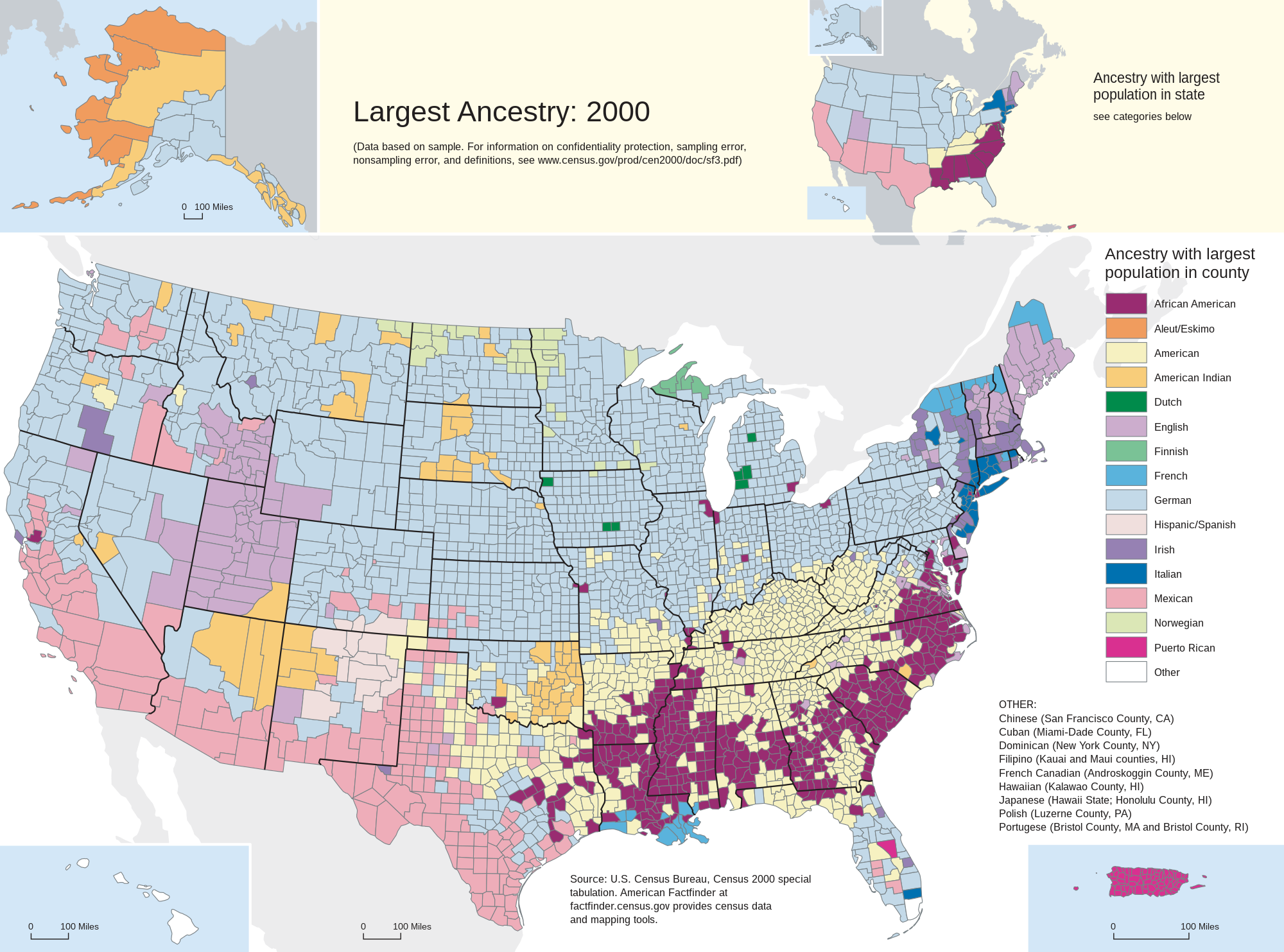
Ethnic Origin Map of the US
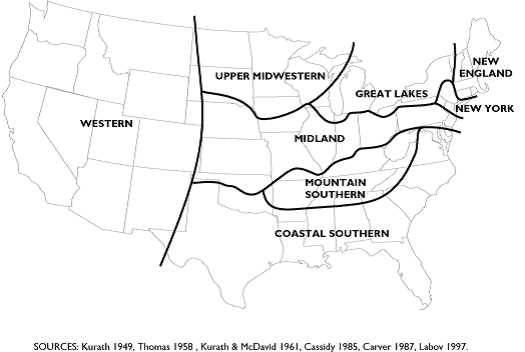
American Dialects (simple version)
American Dialects (complicated version)
Pop vs. Soda
Alabama political ad on English Only

Barbara Johnstone speaks on ‘Pittsburghese’
A discussion of African American English in Ann Arbor
African American English in ‘Springville’

Weird or What?: Voynich

Tomorrow night (May 5) at 8 / 11pm on the Discovery Channel, the episode of the new show ‘Weird or What‘ featuring yours truly commenting on the Voynich Manuscript will be showing to US audiences. Unfortunately, not being a US audience, I and my maple-loving brethren will have to wait for the summer, but if you want to accumulate blackmail material on me while learning (hopefully) about this enigma, tune in (and those of you with Tivo … let me know). On the plus side, apparently the non-US versions of the show are hosted by none other than William Shatner, while the US version is hosted by … nobody? I haven’t seen my contribution (which is just a piece of the Voynich segment, which is just a piece of the episode with the overall title ‘Cocaine Mummies’) – it’ll be interesting to see to what extent my skepticism comes through. Let me know how it goes!

Language and Societies abstracts, vol. 2 (Spring 2010)

The links below lead to abstracts of papers from the 2010 edition of my senior/graduate course, Language and Societies, posted at the course blog of the same name. The authors are junior scholars at Wayne State University, including both undergraduate and graduate students. Comments and questions are extremely welcome, especially at the critical juncture over the next week, when the authors will be making final revisions to their papers.

Anton Anderssen: Exceptional Musical Ability within a Framework of Metalinguistical Ideologies about Swedish Language
Ami Attee: I See What You’re Saying: The Communicative Functions of Hand Gestures
Brandon Davis: Language Variation: A Case Study of the Island of Tanna, Vanuatu
Andrea DiMuzio: Writing History in Formative Mesoamerica: Connecting History and Social Stratification in Four Ancient Scripts
Kate Frederick: Losing Power: The Effect of Language Loss in Native American Communities
Margaret Gale: It’s About Time
Mark Hill: The Implications of Gender in Patient-Physician Discourse
Emily Jelsomeno: Bitch, Nigger and Gay: Exclusive Language? The Semantic Shift of Pejorative Words and Reclamation
Frankie Johnson: Gender-Specific Honorifics in Japanese: A Comparative Study
K.A.L.: Dubbing and Subtitling in Europe: Benefits, Drawbacks, and Cultural Implications
R. LaPorte: Bosnian Language and Ethnic Identity
Kathryn Meloche: On and About Glass Bottles—the effects of technology on the evolution of bottle language
Cherry Meyer: The De-centering of Standard English through Indigenous Postcolonial Poetry
Evelyn Postell-Franklin: Mixed Messages: discourse trends in the hip-hop era
Melinda Pye: Infant Baby Talk: Is it an Effective Device?
Georgia Richardson-Melody: A Worldview Lost in Translation: Issues with Translating Ayurvedic Science into a Biomedical Worldview
Jennifer Rivera: American Sign Language and the influences of Computer Mediated Communication
Leah R. Shapardanis: What do whining dogs have to do with universal grammar?
Graham Sheckels: A Discourse Analysis of Runic Messages in Two Media
Joseph A. Sindone III: Linguistic and paralinguistic cues of text-based computer-mediated communication and their associated social processes
Claudia Voit: Reassessment of the Maya Verb Root, K’al

Counting change: the anthropology of numerical notation

(Not sure if any of my readership is in the Detroit area and might be able to attend, but just in case…)

Counting Change

The anthropology of numerical notation

Stephen Chrisomalis
Assistant Professor, Anthropology
Monday, April 5, 12:30 – 2:30 pm
McGregor Conference Center, Wayne State University, Rooms B & C

In his new book, Numerical Notation: A Comparative History (Cambridge, 2010), Stephen Chrisomalis presents a linguistic, cognitive, and anthropological history of written numeral systems, comparing over 100 different systems used over the past 5,500 years. He invites members of the community of scholars and the public to join him for this book launch and luncheon.

In this lecture, Dr. Chrisomalis aims his work on numerals at the heart of anthropological theory, seeking to refigure thinking about historical processes in the social sciences. As the integrative core of the social sciences, anthropology has an obligation to compare processes of change across time and space. The richness and time-depth of the evidence in Numerical Notation stand in opposition to narrower visions of anthropology as the study of contemporary life.

Free and open to the public
Lunch will be provided to all guests
Discount flyers for Numerical Notation will be available

Download flyer
Campus map

What word has the highest Roman numeral value?

Today at Futility Closet comes a report on the Mesembryanthemum:

The South African flower Mesembryanthemum draws its name from the Greek roots for middle, embryo, and flower. It’s believed to be the English word containing the highest “score” in Roman numerals — four Ms.

I have no quarrel with the first sentence but the second struck me as immediately improbable, because there are no other letters in Mesembryanthemum with a Roman numeral value so its total value is only 4000. I was immediately able to think of a couple that equal it – words that should be familiar to virtually anyone – and with a little searching was able to find a word that I knew and could define with a total of 4502 (Correction: 4602 – I should learn to add better). Can you find my word? More importantly, can you beat my word’s score?

Edit to add: The word is ‘IMMunoCoMproMIseD’, for a total of 4602, as one clever reader has discerned. This is just a game, of course, but there is a long tradition of Roman numeral chronograms in Europe, passages in which the sum of the Roman numerals gives a significant date. A multi-volume corpus of thousands of these was published in the 19th century and is practically begging for reanalysis – the inscriptions can be located and dated securely (Hilton 1882, 1885, 1895).

Hilton, James. 1882. Chronograms. London: Elliot Stock.
———. 1885. Chronograms Continued. London: Elliot Stock.
———. 1895. Chronograms Collected. London: Elliot Stock.